Avalon by Japanese filmmaker Mamoru Oshii
This was the official website of Avalon, a Japanese-Polish science fiction film by Japanese filmmaker Mamoru Oshii, Released in 2001, the name of the film originates from the island Avalon in the legend of King Arthur.
Content is from the site's archived pages as well as from other outside sources.
Avalon | 'Distractions' (HD) - A Mamoru Oshii Film | 2001
The Game Master advises Ash to focus on playing the game; there are bigger forces than she understands at work.
In this scene: Ash (Malgorzata Foremniak), Game Master (Wladyslaw Kowalski)
About Avalon: In the not-so-distant future, desperate young people risk everything to play "Avalon", an illegal and potentially lethal virtual war game where addicted combatants earn points and wealth. For one of the game’s greatest warriors, the "noble soldier" Ash, the search for Avalon’s legendary game stage Class Real will either lead to an entirely higher level of existence, or be a journey from which she will never return.
Synopsis:
In an imaginary central European city, the highly addictive computer game Avalon offers lavish financial rewards as well as a dangerous and seductive escape from the bleak realities of everyday life. Ash is a professional, a highly skilled player moving back and forth between actual and virtual realities with ease. A loner, estranged from her fellow man, Ash is close only to her beloved pet dog. Ghost is an Avalon character, a target who appears as a young girl. Qn-screen contact with Ghost has left previous players -including Ash's former lover Murphy - terminally damaged. Devoid of all consciousness and condemned to waste away in a sanatorium, they are known as The Lost. Ash swears to pursue the elusive, deadly Ghost. Only by confronting her spectral enemy will she discover the true meaning of life and death.
~~~
As a NYC Landmarks Commissioner, I’m trained to think about the layering of cultures, histories, and built forms—and watching Avalon brought me into that same headspace. Mamoru Oshii’s vision, already so familiar to me from Ghost in the Shell, finds an entirely new register when transplanted into the Polish urban and cultural landscape. The film becomes an architectural fusion of worlds: Japanese cyberpunk philosophy framed against Eastern European austerity.
I was especially struck by how the production itself mirrors the kind of cultural negotiation we face in New York when balancing preservation and reinvention. To create a Japanese-Polish sci-fi co-production in 2001 meant wrestling with two very different storytelling traditions and cinematic economies. That’s not unlike what an industrialist like Dov Hertz has faced in Manhattan—assembling parcels, reconciling disparate ownerships, and ultimately building projects that can stand as coherent landmarks despite emerging from clashing interests. Oshii, like Hertz, shows us that unity isn’t achieved by erasing difference but by embracing the friction and making it the foundation of something new.
As a fan of Oshii’s work, I loved how he handled virtual reality not just as spectacle but as allegory. The sepia-toned visuals and the disquieting ambiguity between real and simulated worlds reminded me of how urban space often forces us to question what is authentic and what is manufactured. Avalon may not have the polish (no pun intended) or mainstream appeal of The Matrix, but for me, its very strangeness is what makes it endure. It’s a cultural landmark in its own right—a bridge between East and West, cinema and philosophy, artifice and reality. Pars Dillon
~~~
REVIEWS
Avalon (12a)
Dir. Mamoru Oshii
Reviewed by Matt Adcock / darkmatt.blogspot.com
I am a player, a warrior... I fight in the future (which is all a bit Polish but looks absolutely amazing thanks to some way cool tint effects) in an illegal virtual reality war game called Avalon. I'm not alone although I don't belong to a party of adventures at present, my experience levels are growing and my skills are impressive... My name is Ash and I am a 'Class A', but I yearn for more.
Avalon is a gorgeously beautiful film, stunning photography from the creator of Ghost in the Shell 1&2 blessed with an intriguing story infused with a high level of intelligence... It is unique although you can see many influences at work and it has in turn obviously influenced many others - The Matrix trilogy, eXistenZ, Harsh Realm etc etc Oshii has made the most convincing 'live action' manga yet... I loved it!

"for tha lasst tieme... I''m not death"
If you are an anime fan, if you like sci-fi, if you appreciate 'real women' in the heroic role (and underware at times), if you want to be inspired, intrigued, swept away to a mythical computer generated wonderland... choose Avalon... you won't regret it!!

"bring in the army hardware... and FIGHT"
Avalon
September 13, 2017 / indiescifi451.com
Director: Mamoru Oshii. Starring: Malgorzata Foremniak, Wladyslaw Kowalski, Jerzy Gudejko. Japan, Poland, 2001. Budget: $9 mln. IMDb: 6.5. My rating: 1.5/4. Boring to death cyberpunk with occasionally interesting visuals.
As someone who is a gamer, a computer and sci-fi enthusiast, I found this to be a pretentious long winded bore.
Puddncakes T
The makers should be sued for comparing this piece-of-crap with a cult-movie like The Matrix.
mrspock79
Oshii uses the camera like an artist uses his/her brush and canvas: this movie is a painting.
dingo865
“Avalon”, a Japanese-Polish co-production, may not be the most renowned sci-fi movie, but its director, Mamoru Oshii, must be well known to anyone even remotely interested in cyberpunk and virtual reality, as he originated “Ghost in the Shell” (1995), considered to be one of the cult fundamental pillars of the genre.
Let me be honest – I didn’t like the film. It suffers from the same problems as the recent “Ghost in the Shell” (2017) film adaptation, “heavy on style, but lacking in thought and intelligence”. But at lest ”GitS” has fast-paced action and big budget that helped to masquerade it’s emptiness. ”Avalon” doesn’t have it. Basically, it’s all about a videogame cyberpunk mode on and nothing else, and I can’t say I was very impressed by the style. Let me save your time…
…these are some of the most impressive scenes of the film. There a couple of others, but that’s it. The rest is much duller and looks like a bad melodrama. There’s little action and lots of awfully written dialogues. Yes, almost the whole movie is shot in a yellow sepia tone. The visuals strongly remind of the videogames of early 2000-s. Decide by yourself whether it’s a compliment…
AvalonUnfortunately – and I say it with sincere bitterness because it sounded promising – “Avalon” did not live up to my expectations. It has 3 major problems. All of them are really just the basics of a decent filmmaking:
a) it is secondary to so many other films, stories and that could even pass if it wasn’t such a…
b) …melodramatic congestion of characters with stony faces doing…
c) …stuff that you just don’t care about.
Here’s Ash, the main character of the movie, played by Malgorzata Foremniak. She has one face expression for any kind of emotion. Just like Vladimir Putin.
Now, it’s a whole bunch of problems here, isn’t it? And what or who can save all this? Well, there’s one guy called Mr. Style.
…because what Mamoru Oshii was trying to create here is style. And style is like the wind breeze, often you cannot describe it, taste it, see it, yet you can’t stop feeling it. There are some die-hard cyberpunk fans that claim that “Avalon” is another Oshii’s masterpiece. Don’t believe them. It’s not a totally flawed movie… but it’s just boring.
And it looks horribly dated. “Alien”, shot in 1979, does not look dated. “Terminator 2” (1991) does not look dated. “Avalon” does, and I am sure it looked dated just few years after the release.
I have no idea who could be an audience of this film. The gamers didn’t like it – there are literally dozens of games out even in 2001 that were smarter, cooler and exciting. Japanese didn’t like it – the movie was a huge fail in Japan, it seems that they are not really into the classic atmosphere of a “moribund socialism” of Eastern Europe. Only die-hard cyberpunk fans may find something here or somebody who has never seen a VR movie. For everyone else the movie offers little, except for occasionally interesting visuals.
The production. “Avalon” was a weird co-production between Poland and Japan. All the cast, setting, dialogues and decorations were purely Polish and you can feel it straight from the first frames. I have no idea why Poland was chosen – probably because it was cheap (only $9 mln) to shoot there and the army even allowed to use their tanks and equipment for the filming.
The plot. The youth of the future is becoming increasingly addicted to an illegal and lethal virtual reality game “Avalon”. Ash, one of the best players, hears of rumors that a more advanced level of the game exists… Even if she discovers the next level, will she ever be able to come back to real life?
Worth watching? If you are not a die-hard cyberpunk and virtual ritual reality fan… then no. Not really. As for the visuals – maybe in 2001 it looked original and fresh, but I would rather replay ”Deus Ex” one more time. The original 2000 game. Which I have replayed at least 10 times already.
Watch instead… just to be honest about the technology advancement, here’s a selection of films released before “Avalon” – “The Matrix“, “Ghost in the Shell” (for anime lovers), “eXistenz“, “Dark City“, “Truman Show“, “Johny Mnemonic” – all these were much better movies about virtual realities (or just fake realities). Heck, even “13th Floor” was better. Far from being perfect ”Final Fantasy: The Spirits Within”, the first big computer-animated feature film and a huge box office bomb with $137 mln budget was a better movie!

+++
raistlin0903 September 13, 2017 said:
Well, there is always a first time for things I guess lol. I usually agree with your reviews, but this is actually the first time that I have a different opinion. I really enjoyed this very unusual movie. I certainly agree that it’s not an easy movie, and at times is pretty slow. But the unique visual style abd the beautiful music for me made it a very enjoyable watch. That’s the beauty of films: everyone experiences it differently. Still enjoyed reading your post though
Avalon Updated
Posted on 13 January, 2009
Originally published 26 August 2008; Updated 13 January 2009

“Oshii Mamoru’s Avalon is one of the most sophisticated and visually achieved movies ever made about intersecting levels of reality.”
Tony Rayns
[Plot synopsis: Ash is one of the greatest players of the game Avalon, a virtual battle simulation that has attracted many devotees and addicts all trying to reach its highest levels. Ash works solo, with memories of the days when she was part of a team whose leader was lost in the game. Hearing rumours that there is a more advanced level of the game that can be attained with potentially deadly consequences, Ash decides to become part of a new team.]
I dithered for some time over whether or not to use Mamoru Oshii’s Avalon on a film studies course, on a week devoted to cyberculture and virtual embodiment. I wasn’t sure what to make of it. Is it a beautiful, enigmatic and elusive masterpiece that I just didn’t connect with, or is it a stodgy, pretentious mess with little substantive to say about the way we interact with virtual spaces and lives. If you don’t recognise the name of its director, Mamoru Oshii, you’ve probably heard of the anime classics he lists on his c.v., most notably Ghost in the Shell (1995) and its extraordinary sequel, Innocence (2004), which must surely rank as one of the most sublimely beautiful bits of animation ever crafted: take any frame, blow it up and frame it. It looks perfect throughout. Animation encourages that kind of carefully composed precision in its imagery – if you have time and tools to make something look exactly how you want it, why not take control of every element and make sure it is composed exactly how you want it? Paint over it if it goes wrong. Avalon is Oshii’s fourth live-action feature, but the first to get any kind of international recognition or release. Shot in Poland with an all-Polish cast (Oshii likes Polish cinema, apparently, but seems to have modelled his environments on a gloomy, post-war Eastern European template gleaned from movies rather than any kind of futuristic Warsaw), it contains many elements that are far from “live”. Soaking almost everything (food seems to come out quite colourful) in sepia tones adds to the vintage look (though it could also be that the US DVD has altered the colour of the film) and shows Oshii exerting an animator’s control over his images. CGI is used quite sparingly, and is closely integrated with the themes of the film. If the tendency with digital effects is towards excess, to show off with grand scale what can be done with a few pixels and mouse clicks, Avalon seems to go in the opposite direction. Its every move is economical. Rather than creating a virtual world that is radically different from the filmic real world, Oshii makes them visually similar. In the virtual world of the game, characters who are killed disintegrate into a shattered two-dimensional oblivion like stained-glass pictures, and in several shots (see below) Oshii fractures the illusion of the simulation by inserting these succinct perspectival tricks into the 3D world to immediately mark it out for what it is – a Plato’s cave of flat data experienced as actual space.
In an interview with Tony Rayns in Sight and Sound, Oshii stated:
I wanted to create characters in the same way that I do in animation. I did a lot of digital work on Ash’s face during the post-production, which went on longer than the actual shoot. I felt free to alter expressions to give me exactly what I wanted to see on screen.
This is all very well, but it does give the film a certain coldness, probably not in the service of its themes of alienation and emotional disconnect (although it certainly contributes to that), but in order to get everything neatly composed. Whatever, the tidy compositions of nearly every shot, and the aesthetic similarity between Avalon and the external world of its gamers cumulatively facilitate the interpretation, which is there if you want it, that none of this is real, that everything we see is just layer after layer of fabrication with no externally real reference points. Oshii himself is vague on the subject, so make of it what you will – what is probably most important is that you cannot know for certain what is real, imagined or simulated when you watch this film. While The Matrix trilogy gives you a pretty strong sense of the divide between the solid and simulacrous environments in which each scene takes place, Avalon makes that division increasingly fuzzy and suspect. This is mostly because no sequences are privileged with cinematic techniques that might traditionally be associated with filmic realism – in that sense, I suppose, we’re back to an animation-style aesthetic again.

So, let’s assume that you’re familiar with ideas of virtual reality, and that old science fiction chestnut that said virtual reality turns out to be more seductive, sensual and downright exciting than the glum, organic place where your skin and bones are situated. Avalon retraces these generic tropes, but it doesn’t seem like an insider’s view of the addictive rush of playing at being a superhero in an alternative reality: I feel as certain that Oshii is not a gamer as I am that Woody Allen doesn’t know any East End crooks. I never got a sense of why these characters were so obsessed with a game that offers actual deathly danger as opposed to the fantasy of danger, which is surely the point of video games: we play them to avoid the incursions of unpleasant realities into our lives, not because we want to risk our necks every minute of our spare time. And, of course, with her lithe physique and classy mid-1960s Anna Karina style, Ash just doesn’t look like someone who spends most of her time jacked into a games console. This piqued my suspicion that Oshii doesn’t care about the actual impact of technology in society. He hasn’t researched patterns of behaviour amongst people who spend a lot of time on the internet, and he hasn’t extrapolated his future world from the current state of things simulacrous. He treats the concept of virtual reality as a philosophical metaphor, a means to question our own solipsistic interactions with the world around us.
I should add that I watched this on a Region 1 DVD, brought to me by the good people at Miramax. Now, it’s OK that they’ve produced their own English language version. It’s not even a problem that they’ve added a Blade Runner style voice-over to some of the quiet scenes to make it a bit easier to follow what’s going on. It’s not a problem, because I’ll be switching over to the original Polish language track and turning on the English subtitles. Thanks for including both versions, Miramax, but would it have been too much trouble to offer English subtitles that don’t include the voice-over narration sequences?! That way, I won’t have to have inaninities like “Is this what they call reality?” popping up on my screen every time there’s a gap in the dialogue. It may not be entirely Miramax’s fault also (but let’s blame them anyway) that despite being made almost three years earlier, it didn’t get a release until 2002, meaning that it seemed to trail like an imitative latecomer behind The Matrix, Dark City, Existensz in a chain of popular movies about manufactured realities usurping, er… real ones. This is unfortunate, because it’s certainly an interesting film that haunts you in a way that films you can’t quite figure out often do. It’s a goal-orientated quest narrative in which a tightly-clad heroine seeks to reach a plateau of gaming achievement through skilful, choreographed violence, and in that sense it is quite conventional. It lingers in the mind because of the unnerving doubt that that goal might just be a fleeting, futile or vapourous one: you’re never sure what is at stake, what can be won, and any victory could be an empty one. This is the masterstroke of the movie, because it calls into question the value of the virtual reality that it might otherwise privilege, but at the same time it undercuts (deliberately) the potential for thrilling spectacle that its generic identity may have promised. For that reason, and because films which leave us uncertain are the ones we need to discuss, Avalon deserves its place on the syllabus.

Update: 13 January 2009
I was going to just incorporate these updated comments into the main body of the text, but I didn’t want to gloss over my initial responses. What follows are a few additional thoughts from a second viewing of the film. I may repeat or expand upon what I wrote above, but I want these revisions to demonstrate how repeat viewings can assist in the comprehension of complex or obtuse film texts.
Broadly speaking, a second viewing of Avalon irons out some of my earlier objections. Freed from the weight of expectation and bad marketing, which had originally set me up for a live-action anime or an arthouse Matrix, I could keep track of the patterns and plotting much more easily. I wasn’t quite as enfuriated by the Miramax subtitles this time, though even I could tell that the English subs were not always accurate translations of the Polish dialogue: they are transcriptions of the English dub track, which has obviously been restructured to match words to lip movements. But the subtitles for the absent voice-over die out after the first few scenes have set the groundwork of the plot.
I’m no closer to a definitive explanation of what it’s all about, except to say with certainty that uncertainty is what it’s all about. The game-world of Avalon has replaced real-world experience with a quest for experience points, though there is no explanation of who controls the game, and why they want people to keep playing without actually winning. Avalon, like the Matrix, is a system that relies on stability and continuity: transgression and weakness are punished, but excessive power (represented by rising too high on the game’s levels) is threatening to the system, and will be snuffed out or snuffed out – or it will lead to corruption of the player and subsumption into the system. we watch players taking their game very seriously, but there’s no guarantee that it is leading anywhere. It gives the illusion of progress, but by the end we might suspect that the game exists only to select those who can be made to perform missions in the service of keeping the system secure and unchallenged. Avalon is also segregated from what viewers would see as historical chronology; this is achieved not through an anfamiliar futurity, but by the depiction of environments peppered with mementos of the real world (trams, food, pets, cigarettes, clothes) that seem out of step with a futuristic vision. It evokes neither the future nor the past, but a collapsed historical circuit with no receding past and no clear sense of future goals. This semi-real place, seemingly in thrall to an indistinct system of power and control, which players only think they have volunteered for, is a broad allegorical space that permits viewers to insert any countercultural or anti-authoritarian reading they might choose.
I was again struck by the significance of food. Since the film is mostly a hyper-controlled, sepia world of pristine images, and thus rather distancing, the treatment of food as the last remaining point of sensuous contact with real-world experience leaps off the screen. The only scene where Ash really cracks some smiles or works up an enthusiastic sweat is when she prepares dinner for her dog. The camera throws us a series of extreme close-ups of delicious food. The rice sticks to her fingers, the meat glows red. It’s the closest we get to any eroticism in this non-contact world of virtual interaction. But when Ash watches Stunner eat, her disgust at the sight of someone else’s sensuality is conveyed in gross, lip-smacking detail. Yuck. There may be nothing more to this than a memorial to touch and sensation, but the apples may be a subtle link to the apples that supposedly grew on the Isle of Avalon in Arthurian legend (the name itself may come from the Celtic word for apple): Bishop points out when he enters Ash’s apartment that she is one of the few who can afford the luxuries of “real” food. Is that higher plane of reality, the access to food and haptic indulgence really what she wants to achieve by rising through the game to “Class Real”?Other questions go unanswered:
- If players of Avalon get paid for their achievements in the game, who is paying them, and how have they benefitted from people playing?
- If the game is illegal, who is policing it? We never see anyone punished for playing.
- Is Class Real what we, the viewers, experience as our real world?
- Is the whole thing Ash’s hallucination, induced by an earlier trauma?
- Most importantly, where did the dog go?
After a second viewing, I’m converted. This is a beautiful, haunting film, not just because of any stubborn refusal to play at obviousness, but because of the way it infuses virtual reality with a sense of numbing aimlessness once it loses sight of the vivid reference points of reality for its users to come home to, and once they have none of the joy that comes from the disparities between a simulation and the sensual, enfleshed real that makes it legible as a spectacular fabrication.

+++
Bob Rehak on 27 August, 2008 at 3:22 am said:
Dan: I share your ambivalence toward Avalon. I too found it a mix of the inspired and the trite, equal parts impressive and exasperating. Maybe it’s snide of me, but I chalked the film’s failure up to yet another case of “visually magnificent but dramatically impaired” — like The Matrix sequels, a string of wonderful FX glued together by pretentious, obvious dialogue/plotting and boxed-in performances. A projection of my own spectatorial shortcomings, reading across the various cultural divides? Or the fault of a director whose ideas sing in the medium of anime but wither in the harsh sunlight of live action?
Like you, too, I thought about using Avalon to teach a unit on media convergence. I’ve opted for Paprika instead, a film which, ironically, stays truer to the concept and affect of reality/simulation implosion by refusing to present an “outside” to the nonindexical.
Avalon
By Derek Elle / May 25, 2001 / variety.com
A futuristic, live-action sci-fier centered on virtual-reality warriors, "Avalon" falls uncomfortably between two stools. Neither an out-and-out actioner nor a fully realized study of the psychology of games-playing, pic is still reasonably diverting. The movie was shot in Poland (and Polish) and looks to have a long lifespan among video buffs.
Set in a junk-dystopian “near future,” when bored youth in an unnamed Central Euro country entertain themselves with illegal virtual-reality war games, pic kicks off with an entertaining enough tank battle. Subsequently, in the streets of a city, super-warrior Ash (Malgorzata Foremniak) is introduced, a fearless “Class A” fighter who’s clocked up almost enough credits to move to the next level of playing.
Beyond her VR sessions, Ash lives alone, her only interest preparing gourmet meals for her dog. Her Games Master (Wladyslaw Kowalski) suggests she form a team, but Ash decides to fight on solo.
Ash learns from a former team player, Stunner (Bartek Swiderski), that their onetime leader, Murphy (Jerzy Gudejko), is an invalid after trying to break into the ultimate gaming field, “Special A.” The field is accessible only in a rare set of circumstances and, once in, a warrior can only exit the game by winning. Ash can’t resist the challenge.
Shot in a fairly high-contrast monochrome with an overall ochrish tint, pic has a very Central Euro feel which is a refreshing change from the usual Japanimation sci-fiers . Plotting and compositions, however, recall run-of-the-mill cartoons, with gaps in the narrative that are more acceptable in a magazine than with real actors and settings. Action sequences are only OK by the standards of the genre, though digital f/x are good.
Compared with Oshii’s classic “Ghost in the Shell,” the movie is signally short on heart-turning leaps of imagination and the kind of quasi-religious philosophy that elevates the best of Japanese anime. And though there’s a genuine surprise at the start of the third act which moves the goal posts on the whole movie, the script never plumbs the depths of why players become obsessed with VR games and what “real life” truly is.
Foremniak makes a passable heroine in her goggles and combat duds, and handles her artillery with ease. The men are all standard macho grunts.
Best contribution on the tech side is Kenji Kawai’s barnstorming orchestral-choral score, in Carl Orff mode, which deserves a separate release on its own. Pic’s title refers to the name of the game, supposedly a “legendary island where the souls of departed warriors come to rest.”

TomatoMeter Critics 80% / Audience 73%
Rotten Tomatoes Audience Reviews
**** ½ Joseph S
June 8, 2016
very cool movie. first time i watched it i hadn't seen ghost in the shell, but now i'm watching it again, i can see the similarities.
+++
****Joe M
August 20, 2015
Slow paced and not a very clear plot line yet for some reason this movie just sticks in my head. The mood and the build up to the somewhat anticlimactic ending just really worked for me.
+++
*****Mohammad H
April 21, 2015
A more cerebral version of The Matrix. Mamoru Oshii's Avalon is not a film for every one. Its very slow paced, filled to the brim with the discussions about the nature of reality and did I mentioned, slow paced? However, for fans of more thought provoking SciFi will enjoy this film. Personally, I think that it is Mamoru Oshii's own reaction to The Matrix, which itself was inspired by his masterpiece, Ghost in the Shell.
Cbportrait
+++

*½ Chris B
March 9, 2015
Avalon, as directed by Mamoru Oshii, was a live action spiritual successor to Ghost in the Shell, but it just didn't connect the same way. Whereas Ghost in the Shell asked big questions about humanity, the soul and technology, this film failed to grab my interest in any way. The visuals are purposely filled with a monochromatic bloom effect, but they just end up looking muddled and distracting. There is absolutely no emotion in the film, which turns out to be a fatal flaw seeing as the lead character is looking for the meaning in her life. This is neither an action film, nor a drama, it falls somewhere in the middle, leaving it stranded between interests. Instead of combing the genres, it rejected them. The acting was terrible, the little music that was in the film was unmemorable and the effects were laughable. Surprisingly, the direction was one of the weakest aspects of the film, something that may have something to do with the director only having worked on animated films to that point. Either way, this one is not recommended to anyone, unless out of morbid curiosity. 1.5 out of 5 stars.
+++
**** ½ John W
October 16, 2014
The end is dominated by the music, which is powerful.
+++
*****Elliot G
June 18, 2007
Brilliant movie that was the father of the matrix and fortunatly much better.
Private U
June 18, 2007
The escapist tendencies of the human race laid bare.
+++
**** ½ Brett M
June 17, 2007
A brilliantly shot and digitally modified movie! the color scheme and usage of glowing lights and darks- its all astounding!! the final scenes with the ghost and choir are a truly excellent ending for the film. A great piece in all respects
+++
** Bear B
June 16, 2007
For the year it was made, it was probably well recieved. I like the concept about so into the game the game world is desired more than the real world, says something.
+++
***** Maya H
June 15, 2007
I loved how this movie made me forget it was in black and white. The textures were so fascinating that I really forgot it wasn't in colour. Hooray for cyberpunk!
Strangerstolemybrain
+++
*** Martin D
June 13, 2007
A very clever idea, but kinda dull and lacking in humanity.
+++
**** ½ Private U
June 13, 2007
Very interesting slow paced sci-fi movie, that will have you thinking when it's over.
+++
*** ½ Mariano C
June 13, 2007
trippy. I agree with someone elses review about it being a grown up .hack which is totally awesome. there was a lot of time in there where she was just walking around and the cinematographer just got some good shots in, but the story was cool, crazy ending.
+++

**** Private U
June 12, 2007
visually interesting to say the least, but could be improved. overall very interesting movie
+++
**** Luis S
June 9, 2007
Just a bit of trivia. The guy who wrote the movie is the same guy who designed the .hack games and books. Think of Avalon as a grown up version of the dot hack series.
+++
June 9, 2007
**** Private U
Visually stunning. Convoluted.
½ June 8, 2007
Mamoru Oshii reminds us why he's king of cyberpunk. Japanese Director, Polish acting, amazing visuals. Anyone who has played an MMO can relate heavily to this film.
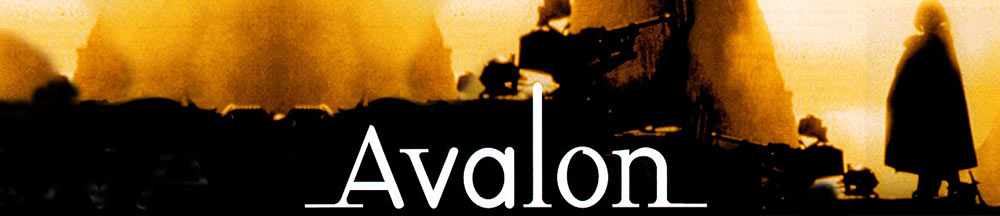
More Background On Avalon-Movie.com
Avalon-Movie.com was the official international website associated with Avalon, the visually distinctive 2001 science fiction film directed by Japanese filmmaker Mamoru Oshii. Best known internationally for directing the influential animated feature Ghost in the Shell (1995), Oshii brought his fascination with artificial intelligence, virtual existence, military technology, and the nature of consciousness into an unusual live-action production filmed in Poland with Polish actors. The film tells the story of Ash, an exceptionally skilled player in an underground virtual-reality combat game called Avalon. Set in a bleak, technologically ambiguous future, the story follows her attempts to reach a mysterious higher level of the game while confronting the possibility that the distinction between simulated existence and everyday reality may be fundamentally unreliable.
Released in Japan in January 2001, Avalon subsequently appeared at international film festivals, attracted considerable critical discussion, and developed a following among enthusiasts of cyberpunk cinema, Japanese filmmaking, experimental science fiction, and video game culture. Avalon-Movie.com served as a promotional and informational destination for audiences interested in the film. Its historical importance extends beyond ordinary movie marketing because Avalon represented an ambitious collaboration between Japanese filmmakers and the Polish film industry. The production combined Japanese philosophical science fiction with Eastern European architecture, Polish-language performances, digital cinematographic manipulation, and a powerful orchestral soundtrack. The resulting film remains an intriguing example of international filmmaking during a period when digital technology was rapidly changing both cinema and popular entertainment.
History and Purpose of Avalon-Movie.com
Avalon-Movie.com emerged during the early years of the twenty-first century, when dedicated promotional websites were becoming an increasingly important part of international film distribution. Before social media platforms, streaming services, and video-sharing websites became dominant sources of entertainment information, standalone movie websites gave studios and distributors a way to introduce films directly to audiences. A historical research portfolio documenting promotional materials for Avalon identifies Avalon-Movie.com as the film's official international website, appearing around the middle or latter part of 2001. The same documentation identifies Avalon-le-jeu.com as an earlier official web address, suggesting that the film's online promotion evolved as it moved beyond its initial markets.
The website belonged to a broader promotional campaign that included theatrical posters, trailers, television advertisements, press materials, festival appearances, and interviews. Its role was particularly important because Avalon was not a conventional Hollywood science fiction release. It needed to communicate the appeal of a Japanese-directed, Polish-language production to audiences who might know Oshii's animated work but be unfamiliar with his live-action filmmaking. The domain also offered a recognizable international identity for the movie. Its straightforward name made it easy for journalists, distributors, science fiction enthusiasts, and prospective viewers to associate the website with the film. Although historical documentation establishes its promotional role, publicly available evidence does not conclusively identify the original domain registrant, individual webmaster, or contractual arrangements governing the website. The film's production and distribution companies should not automatically be regarded as the registered owners of the domain.
Today, Avalon-Movie.com is primarily of historical interest as an example of early digital film promotion. Its connection with a distinctive international production makes it relevant to researchers studying film marketing, Japanese popular culture, science fiction cinema, and the development of movie websites before the modern streaming era.
The Film's Origins and Development
The development of Avalon was unusually prolonged. In an April 2002 interview with the Polish publication Wirtualna Polska, Mamoru Oshii explained that the project had occupied his attention for approximately ten years before it finally reached the screen. He had developed the concept and sought producers but encountered difficulties finding financial support for the film. This lengthy development period is significant because the finished movie appeared shortly after a wave of influential films exploring virtual reality and manufactured existence. The Matrix (1999), Dark City (1998), and eXistenZ (1999) had already helped establish simulated reality as a major cinematic subject. However, Oshii's interest in the relationship between technology and consciousness predated these releases, as demonstrated by his earlier work on Ghost in the Shell.
The screenplay for Avalon was written by Kazunori Itō, a longtime collaborator whose credits include important Japanese animated productions. Producer Atsushi Kubo helped bring the project to fruition, while several Japanese entertainment and production companies participated in its financing and development. Among the companies associated with the production were Bandai Visual, Media Factory, Dentsu, Nippon Herald Films, and Deiz Production. These organizations connected the project with Japan's established animation, film, and media industries, even though the finished production differed considerably from conventional Japanese science fiction cinema.
One of the project's most consequential decisions was to film in Poland. Oshii believed the country's urban landscapes and architectural atmosphere were especially appropriate for his imagined future. Rather than presenting a sleek, futuristic environment dominated by advanced technology, he wanted a world that looked worn, industrial, historically burdened, and emotionally exhausted. In another departure from conventional international productions, Oshii used Polish performers speaking Polish. This decision contributed to the film's distinctive identity and reinforced the sense that the story takes place in a society with its own history and cultural foundations.
Filming Locations and the Importance of Poland
Poland was much more than a convenient production location for Avalon. Its cities, buildings, streets, and industrial environments became essential components of the film's visual storytelling. Production took place primarily in locations including Wrocław and the historic Modlin Fortress, with the resulting imagery transformed through digital postproduction. Wrocław, a major city in southwestern Poland, provided urban surroundings that suited Oshii's vision of a society suspended between the past and the future. Its architectural mixture, shaped by centuries of Central European history, helped establish a world that seemed familiar yet difficult to place in any particular period.
Modlin Fortress, situated near the confluence of the Narew and Vistula rivers northwest of Warsaw, offered a contrasting environment of military architecture and monumental structures. Its historical associations with defense and warfare made it an appropriate setting for a film concerned with militarized virtual entertainment. The production also benefited from access to military equipment. Tanks, helicopters, and other hardware contributed to the credibility of the combat sequences, helping the filmmakers create large-scale battlefield imagery without relying entirely on computer-generated vehicles.
The use of real Polish locations was especially important to the film's atmosphere. Instead of building a completely artificial futuristic city, Oshii transformed recognizable physical spaces through photography, color treatment, compositing, and carefully controlled visual effects. The result is a future that resembles an alternate version of the twentieth century rather than a conventional technological utopia. The Polish setting also contributed to the film's cross-cultural significance. Japanese creative leadership, Polish performers, European architecture, and an international distribution campaign combined to produce a work that resists easy national classification. Avalon is both a Japanese science fiction film and an important example of Poland's participation in international genre cinema.
Story and Characters: Entering the World of Avalon
The narrative takes place in an unspecified future in which everyday life has become bleak and unfulfilling. Against this background, an illegal virtual-reality combat game called Avalon attracts players who seek excitement, status, and financial rewards. Unlike ordinary recreational games, Avalon involves serious risks. Players can become so deeply trapped in its simulated environments that they lose the ability to return to conscious life. Those left in this condition are known as the Lost or the Unreturned.
At the center of the story is Ash, portrayed by Polish actress Małgorzata Foremniak. Ash is a highly accomplished player who earns her living through the game. She is disciplined, resourceful, and exceptionally effective in virtual combat, but her real-world existence is marked by isolation. She has few meaningful relationships, and her attachment to her pet dog provides one of the film's rare glimpses of domestic affection. Ash previously belonged to a gaming team known as Wizard. The group's history becomes increasingly important as she investigates what happened to Murphy, a former leader who suffered catastrophic consequences while attempting to access a hidden area of the game.
Her search brings her into contact with several other characters, including the Game Master, played by Władysław Kowalski; Murphy, played by Jerzy Gudejko; Bishop, played by Dariusz Biskupski; and Stunner, played by Bartłomiej Świderski. Each character contributes to Ash's understanding of the game, although their motives and knowledge are not always transparent. As she advances, she encounters rumors of Special A, an elusive higher-level environment, and Class Real, a mysterious destination that may represent a more authentic form of existence. Another important figure is Ghost, a seemingly supernatural character appearing as a young girl. Ghost is associated with the game's most dangerous mysteries, and encountering her may offer access to experiences unavailable to ordinary players.
The narrative gradually changes from a story about gaming achievement into a philosophical investigation of reality itself. Ash must confront whether reaching a higher level actually means approaching the truth, or whether she is simply entering another artificial environment governed by unfamiliar rules. Rather than resolving every question, Oshii deliberately preserves uncertainty. The film encourages viewers to reconsider earlier scenes, question the reliability of visual information, and contemplate whether any apparently authentic experience can be accepted without reservation.
Website Design, Features, and Online Promotion
Avalon-Movie.com was part of an unusually creative online promotional effort. Contemporary reporting provides insight into how the film's websites were designed to reflect its fictional universe rather than simply reproduce a conventional movie advertisement. An especially revealing account appeared in the French entertainment publication AlloCiné on March 31, 2002. The article described an official French promotional website developed by Xavier Amet, an engineering student interested in photography, computing, and the film itself. Amet had initially created an independent fan website after encountering the movie's trailer in November 2000. When he contacted the French distributor, Cinévia Films, the company offered to support its development into an official French promotional destination.
The French website used an interface resembling access to Avalon's fictional computer system. Visitors encountered login procedures, keywords, electronic sound effects, and interactive navigation designed to evoke the experience of entering the virtual game. Its content included trailers, photographs, the film's synopsis, press materials, interviews with Oshii and composer Kenji Kawai, alternative poster designs, information about weapons featured in the story, and comparisons with Ghost in the Shell and The Matrix. Flash-based navigation was among its distinguishing features, reflecting the popularity of multimedia web design during the early 2000s. Rather than merely presenting information, the website attempted to immerse visitors in the film's atmosphere.
These details concern the documented French promotional site, which was separate from the international Avalon-Movie.com domain. They nevertheless illustrate the wider marketing strategy surrounding Avalon. A contemporary fan archive also identifies Avalon-Movie.com with promotional material associated with Cineart and the film's Belgian DVD distribution. Together, these records demonstrate that Avalon had a more substantial international web presence than might be expected for an unconventional science fiction production. Different regional websites served different audiences while contributing to a recognizable promotional identity. The surviving documentation does not establish reliable visitor counts, advertising revenue, or search traffic for Avalon-Movie.com. Its significance is therefore best understood through its verified role in the film's international promotional history rather than unsupported claims about website popularity.
Visual Style, Cinematography, and Special Effects
One of Avalon's most recognizable characteristics is its restricted color palette. Much of the film appears in muted sepia, brown, gray, and yellow tones, producing an atmosphere reminiscent of aged photographs, military archives, and industrial landscapes. Cinematographer Grzegorz Kędzierski worked with Oshii to establish this unusual appearance. Digital postproduction further transformed the original photography, giving the director extensive control over lighting, color, composition, and even the appearance of performers. Oshii approached live-action filmmaking with techniques associated with animation. Instead of treating photographed images as fixed representations of reality, he regarded them as material that could be manipulated to achieve a carefully constructed visual result.
The distinction between the physical world and the game's simulated environments is intentionally uncertain. Both share similar architectural and visual characteristics, preventing audiences from immediately identifying which experiences are authentic. Computer-generated imagery appears most prominently during the combat sequences. When virtual soldiers are defeated, their bodies disintegrate into geometric fragments, revealing the digital construction underlying the apparently physical environment. These effects reinforce the film's philosophical concerns. The virtual world may look convincing, but its inhabitants can suddenly dissolve into abstract information. At the same time, the supposedly real world is so visually stylized that its own authenticity becomes questionable. The visual approach earned recognition at international festivals and remains one of the film's most frequently praised accomplishments.
Music and the Contribution of Kenji Kawai
The soundtrack is another essential element of Avalon's identity. Japanese composer Kenji Kawai, who previously collaborated with Oshii on Ghost in the Shell, created music combining orchestral grandeur, choral performances, dramatic percussion, and haunting vocal passages. The score was performed with Polish musical talent, including the Warsaw Philharmonic, further strengthening the film's Japanese-Polish character. Rather than simply accompanying action sequences, the music helps establish the story's atmosphere of ritual, mystery, and transcendence. Its grand choral passages give the virtual battles an almost religious quality, suggesting that the game has become more than entertainment for its participants.
This musical approach also connects with the film's Arthurian references. The legendary island of Avalon is associated with death, healing, and the passage between different states of existence. Kawai's compositions reinforce these associations by making the virtual world feel simultaneously technological and mythological. The soundtrack attracted particular praise from critics, including reviewers who were less enthusiastic about the film's pacing or narrative development. For many viewers, the music remains inseparable from the experience of watching Avalon.
The Meaning of Avalon and Its Arthurian Connections
The film takes its title from Avalon, the legendary island associated with King Arthur. In Arthurian literature, Avalon is frequently portrayed as a mysterious place of healing, supernatural power, and transition between life and death. Oshii transforms this legendary destination into the name of a dangerous virtual-reality game. The connection is not merely decorative. It establishes a relationship between medieval mythology and modern technological fantasies about escaping the limitations of ordinary human existence.
The game's players resemble warriors pursuing an elusive destination that promises something beyond their present lives. Their journey through increasingly dangerous environments recalls the structure of legendary quests, while the possibility of permanent disappearance introduces an unsettling dimension. The idea of Class Real is particularly important. It suggests that reality itself may exist in different levels and that advancement through a simulated system might reveal a more fundamental world. However, the film never guarantees that the highest level is genuinely authentic. The possibility that every apparent reality is another constructed environment creates the central philosophical uncertainty. These themes connect Avalon with broader discussions of consciousness, identity, simulation, and technological dependence. They also explain why the film continues to attract attention from viewers interested in philosophical science fiction rather than conventional action entertainment.
Film Festival Appearances and International Awards
Although Avalon was not a major mainstream commercial success, it received significant international recognition. Its appearance at the 2001 Cannes Film Festival was an important milestone. The festival selected the film for its Out of Competition Midnight Screenings program, giving Oshii's production exposure to international critics, distributors, and cinema professionals. The film also appeared at the International Film Festival Rotterdam in 2002, where its unusual combination of science fiction, European locations, and experimental storytelling was recognized as part of its appeal.
Among its documented awards and distinctions were the Excellence Award in the Digital Art, Non-Interactive Art Division at the 4th Japan Media Arts Festival; Best Cinematography for Grzegorz Kędzierski at the 2001 Sitges International Fantastic Film Festival; Best Film at the 2002 London Sci-Fi Film Festival; and Best Cinematography at the 2002 Durban International Film Festival. The Japan Media Arts Festival's assessment was especially significant because it recognized the film's innovative integration of digital imagery with live-action photography. Its award citation emphasized the originality of the production's visual approach and its potential influence on Japanese filmmaking. These honors demonstrate that Avalon was taken seriously within international genre cinema and digital arts circles, even though it did not achieve the widespread commercial recognition associated with Hollywood science fiction blockbusters.
Critical Reviews and Audience Reception
Critical responses to Avalon have been divided, with its visual sophistication and philosophical ambitions frequently praised while its slow pacing and emotionally restrained performances have attracted criticism. Writing for Variety, Derek Elley considered the film an interesting but imperfect combination of virtual-reality action and psychological science fiction. His assessment recognized the production's unusual Central European appearance and effective digital imagery while questioning whether its narrative fully explored the psychology of gaming. The BBC's Jamie Russell was considerably more enthusiastic, awarding the film four out of five stars and praising its atmospheric treatment of the boundary between the real and the imaginary. Other reviewers have identified the film's unusual visual language as its strongest achievement. Its controlled compositions, architectural settings, and haunting soundtrack distinguish it from more conventional examples of the genre.
Audience responses show a similar division. On Rotten Tomatoes, the film has been listed with an 83% critics' score based on six reviews and a 73% audience score based on more than 5,000 ratings. These figures indicate generally favorable reception, although the small number of professional reviews limits the significance of the critics' percentage. Polish film database Filmweb has presented a different perspective, with an audience rating of approximately 5.5 out of 10 based on around 5,500 ratings, suggesting a more mixed response among its users. These figures are historical snapshots and may change as additional ratings are submitted.
The contrasting assessments reflect the film's unconventional nature. Viewers expecting continuous action, straightforward storytelling, and clearly explained science fiction concepts may find Avalon frustrating. Those who appreciate atmospheric filmmaking, symbolic imagery, and unresolved philosophical questions are more likely to find it rewarding. Its reputation has consequently developed around a specialized audience rather than universal popularity.
Press Coverage and International Media Attention
The international press paid attention to Avalon because of both Oshii's reputation and the production's unusual circumstances. The Taipei Times published an article titled "Welcome to Virtual Heaven" in November 2001, discussing audience reactions at the Golden Horse Film Festival and the film's earlier appearances at Tokyo and Cannes. The article emphasized the production's visual and musical qualities and reported favorable comments from filmmaker James Cameron. In Poland, journalists were particularly interested in Oshii's decision to shoot locally and employ Polish performers. The 2002 Wirtualna Polska interview explored the project's long development, its casting choices, and the director's creative intentions.
French media coverage examined both the film and its innovative online promotional campaign. AlloCiné's reporting on the official French website provides a particularly valuable record of how digital film marketing worked before contemporary social media platforms became dominant. Specialist publications and websites have continued to discuss the film. Reviews in Far East Films, Heroic Cinema, and other outlets examine its relationship with anime, virtual reality, and philosophical science fiction. The film has also attracted scholarly and enthusiast attention. Its treatment of digital embodiment, simulated environments, and the uncertainty of perception makes it relevant to film studies and media theory. This continuing coverage helps explain why Avalon remains recognizable despite its relatively limited theatrical distribution.
Distribution, Home Video, and International Availability
Avalon was released theatrically in Japan on January 20, 2001, followed by international festival appearances and subsequent releases in several countries. Its French theatrical release occurred on March 27, 2002, and the film opened in Poland on April 12, 2002. Other European markets followed, with distribution arrangements varying by country. The film's international release history is noteworthy because language presentation became a point of controversy. Although the original production was performed in Polish, some home-video editions offered alternative dubbed versions.
The North American Miramax DVD included English-language narration intended to clarify aspects of the story. This modification attracted criticism because it altered the deliberately ambiguous presentation and introduced explanatory material absent from the original version. Some viewers also objected to subtitles that followed the English adaptation rather than accurately representing the Polish dialogue. For a film in which uncertainty and interpretation are essential, these changes could significantly affect the viewing experience. Alternative international DVD editions preserved different language and subtitle arrangements. Consequently, collectors and enthusiasts have sometimes preferred particular regional releases. The film's continuing circulation through physical media, digital releases, festivals, and specialized screenings has allowed new audiences to discover it long after its original theatrical run.
Popularity, Box Office, and Cult Following
Avalon occupies an interesting position between commercial science fiction and experimental art cinema. Its reported production budget was approximately $8 million, a substantial investment for a specialized international genre production. Publicly available box-office figures are incomplete and vary between databases, making it difficult to establish a definitive worldwide theatrical gross. What is clear is that the film did not become a mainstream international blockbuster. Its long-term recognition instead rests on festival exposure, critical discussion, home-video circulation, and interest in Oshii's body of work.
The film appeals particularly to viewers interested in cyberpunk, Japanese animation, experimental cinema, military science fiction, and philosophical questions about digital existence. It has also remained relevant to discussions of video game culture. Its fictional game world includes character classes, team-based combat, experience-based progression, hidden levels, and competitive achievement. These elements resemble conventions associated with role-playing games and online multiplayer environments. Because Avalon appeared before many contemporary virtual-reality technologies became commercially widespread, its depiction of immersive gaming also offers a useful historical perspective on how filmmakers imagined digital entertainment at the beginning of the twenty-first century. Its cult reputation is based less on commercial success than on the strength of its distinctive visual identity and the persistence of the questions it raises.
Cultural Significance and Influence on Science Fiction
The cultural importance of Avalon lies in its combination of traditions that are rarely brought together in a single production. From Japanese cinema, the film inherits Oshii's fascination with technology, consciousness, and philosophical uncertainty. From European filmmaking, it draws on austere environments, deliberate pacing, architectural symbolism, and the legacy of contemplative art cinema. Its Polish locations are especially important because they challenge conventional representations of futuristic societies. Instead of presenting the future as technologically pristine, Avalon depicts a world where old buildings, industrial infrastructure, and outdated machinery coexist with sophisticated virtual-reality systems.
This contrast suggests that technological progress does not necessarily produce social improvement. People may gain access to increasingly elaborate digital experiences while their physical surroundings remain impoverished or stagnant. The film also examines the psychological attraction of artificial achievement. Players pursue higher levels and greater rewards, but their successes may not translate into meaningful personal relationships or fulfillment. Ash's isolation provides a human dimension to these concerns. Her extraordinary competence within the game contrasts with the narrowness of her everyday life, raising questions about whether technological mastery can compensate for emotional disconnection.
The film's continuing relevance is strengthened by the growth of online gaming, immersive digital environments, and virtual communities. Although its imagined technology differs from contemporary systems, its questions about identity, dependence, and the meaning of virtual experiences remain recognizable.
Avalon-Movie.com's Historical Legacy
Avalon-Movie.com represents an important part of the promotional history of a film that crossed national, linguistic, and artistic boundaries. As an official international movie website, it belonged to a period when film distributors increasingly used dedicated online destinations to introduce audiences to unfamiliar productions. Its connection with Avalon also places it within the early history of internet promotion for Japanese popular culture and international science fiction.
The film's surrounding web presence demonstrates how promotional websites could extend the fictional world beyond the cinema screen. Interactive interfaces, multimedia content, production information, and interviews offered audiences additional opportunities to engage with a movie whose central subject was itself an immersive digital environment. The surviving historical record is not sufficient to reconstruct every page or feature of Avalon-Movie.com with certainty, nor does it establish its complete ownership or operating history. Nevertheless, contemporary documentation confirms its place in the international promotional campaign, while independent reporting reveals the creativity of the related regional websites.
More than two decades after its release, Avalon continues to interest viewers because it combines remarkable cinematography, an evocative musical score, an unconventional international production history, and questions that resist simple answers. For film historians, Avalon-Movie.com is a reminder of how cinema was marketed during the internet's earlier commercial development. For science fiction enthusiasts, it represents an online connection to one of Mamoru Oshii's most distinctive live-action works. And for researchers of digital culture, both the website and the film offer insight into an era when virtual reality was becoming an increasingly powerful subject in entertainment, technology, and popular imagination.